If you live in Wortley, Bolsterstone or anywhere else in Stocksbridge, we can quote for new lawn installation; we also cover nearby Penistone, Hoyland and Barnsley. We visit, measure and talk through the options with you first, then send a written, itemised quote for your Stocksbridge garden.
A new lawn is the quickest way to make a garden feel cared for, and the easiest thing to get wrong by rushing the preparation. Stocksbridge Landscaping & Driveways installs new lawns across Stocksbridge by turf, by seed and by hydroseeding, and in every case the ground is cleared, cultivated, levelled and firmed before a single roll or seed goes down.
The service is for people whose existing lawn is more moss and weed than grass, for new-build gardens where the builder left compacted subsoil under an inch of topsoil, and for anyone who has just finished a patio or extension and has a churned-up mess to put right. It also suits a garden that has been reshaped, where the old lawn no longer fits the new borders and paths.
Which method we use depends on how quickly you need a usable lawn, the size of the area, and the time of year. Turf is instant, seed is economical, and hydroseeding covers large or awkward areas evenly. Once the lawn is established, our Lawn Maintenance and Lawn Restoration services keep it that way. This page explains each method, how we go about it in Stocksbridge, and what affects the price.
Turf Laying
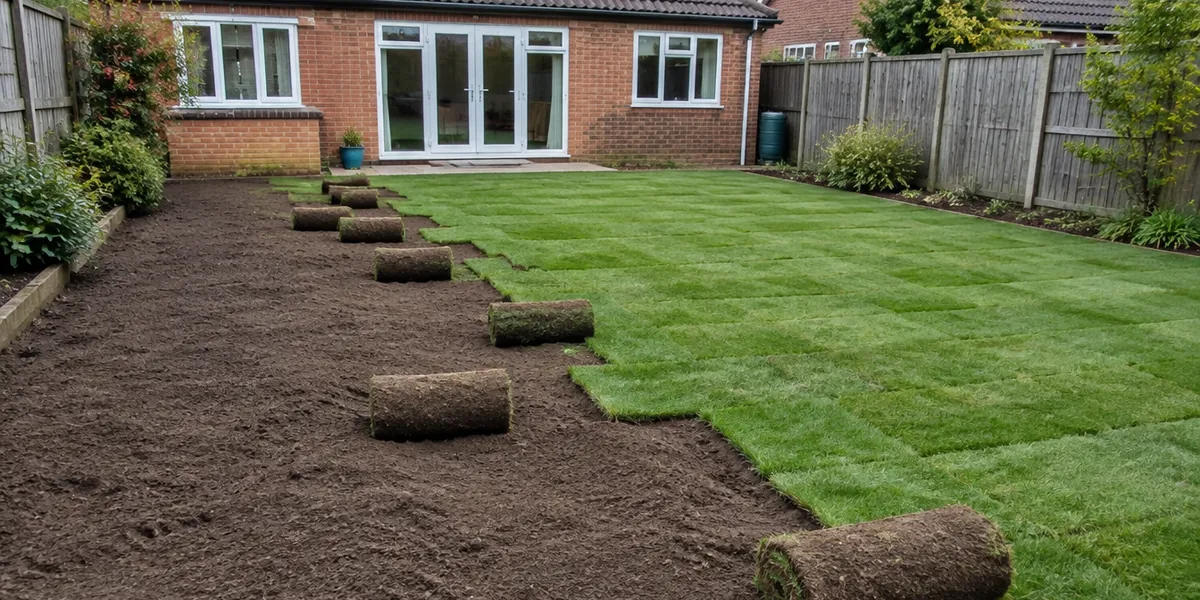
Turf laying is the installation of ready-grown grass in rolls, giving a green lawn on the day it is laid and a usable one within three to four weeks. It is the right choice when you want the garden finished now, when children or dogs need to be back on it soon, or when the area is small enough that the extra cost over seed does not matter much. Most lawns we turf in Stocksbridge are under 100 square metres.
We use cultivated turf grown on sandy loam, usually a ryegrass and fescue mix for a hard-wearing family lawn, or a finer fescue and bent blend for an ornamental one. Turf is cut the day before delivery and must be laid within 24 hours in summer, so we book it for the morning we need it.
Preparation is the job. We strip the old lawn with a turf cutter, rotavate to 150 mm, remove stones and roots, and add topsoil or sharp sand where levels or drainage need it. The surface is raked, trodden in a heel-to-toe shuffle to firm it, raked again and given a pre-turf fertiliser. Rolls are laid in a staggered brick pattern from boards so the prepared soil is not walked on, joints pushed tight and edges cut with a half-moon.
Watering decides whether it takes. New turf needs soaking through to the soil beneath every day for the first fortnight in warm weather, which can be a problem during a hosepipe ban. Spring and autumn are best; we turf in summer only where you can keep it watered. The result depends on the soil under it, the firmness of the bed and that first month of care.
Lawn Seeding
Lawn seeding is sowing grass seed onto prepared ground and growing the lawn in place. It is the right choice for larger areas where turf becomes expensive, for people happy to wait a season for a usable lawn, and where you want a specific seed mix: a shade-tolerant blend under trees, a drought-tolerant mix for a sunny plot, or wildflower and grass at the far end of the garden.
The preparation is the same as for turf, and if anything more careful, because seed shows up every lump and hollow. After rotavating, levelling and firming we rake the surface to a fine tilth. Seed goes on at around 35 grams per square metre, sown in two passes at right angles so the coverage is even, then lightly raked in and rolled or trodden so it sits in contact with the soil.
Timing matters more than anything. In Stocksbridge the best windows are mid-March to May and late August to early October, when the soil is warm and rain is reliable. Summer sowing needs constant watering and winter sowing does not germinate. We cover newly sown areas with fleece or netting where pigeons are a problem.
Germination takes seven to twenty-one days depending on the mix and the weather. The first cut is at about 75 mm, taken down to 50 mm with sharp blades, and the lawn should not take heavy use until it has been cut several times. Seeded lawns root more deeply than turf because the grass grows into the soil it will live in.
Hydroseeding
Hydroseeding is spraying a slurry of grass seed, water, fibre mulch, fertiliser and a tackifier onto prepared ground from a tank and hose. The mulch holds the seed in place, keeps it damp and gives it a head start, so germination is faster and more even than dry sowing. It is the right choice for large lawns, for banks and slopes where seed would wash off, and for awkward shapes where turf would be slow to lay.
We prepare the ground as for any seeded lawn: clear, cultivate, level, firm and rake. The slurry is mixed to suit the site, with a heavier mulch rate on slopes, and the seed mix chosen for the use, whether hard-wearing, fine or shade-tolerant. The green dye in the mulch shows exactly what has been covered, so there are no missed strips.
Hydroseeding is sprayed in a single visit, often in a couple of hours for a medium garden, and the mulch layer means it needs less watering in the first weeks than bare seed. Germination is typically five to fourteen days in the spring and autumn windows. The mulch breaks down into the soil over the first season.
It costs more than dry seeding and less than turf, and it is not worth doing on a tiny lawn. Where it wins is on large back gardens, such as those on new-build estates, and on sloping plots. As with all seeding, the result depends on sowing in the right season, keeping it moist, and staying off it until the grass is well up.
What You Get When We Handle Your New Lawn Installation
Lawns fail for reasons that are invisible on the day they go in: compacted subsoil, buried builders' rubble, bad levels that leave puddles, or turf laid onto dry dust and never watered. We have lifted enough tired lawns in Stocksbridge to know what is usually underneath, and we fix it first.
Our team does the groundwork as a landscaper, not as a turf supplier dropping rolls on the drive. That means rotavating to depth, bringing in screened topsoil where needed, setting the levels with a rake and a long straight edge, and firming properly. We choose the turf or seed mix for how you use the garden and how much sun it gets.
You get a written quote that says what preparation is included, honest advice on which method suits the size and the season, and a written guarantee on the installation. We also leave you with clear watering and first-cut instructions, because the first month is when a new lawn is made or lost.
Our New Lawn Installation Process
- Site visit: we look at the existing lawn or ground, dig a test hole to see the topsoil depth and drainage, and note shade, slope and how the garden is used.
- Method and quote: we recommend turf, seed or hydroseeding and give a written quote covering preparation, materials and any topsoil or drainage work.
- Clearing: old turf is stripped, weeds are dealt with, and rubble, roots and stones are removed.
- Cultivating and levelling: the soil is rotavated to 150 mm, topsoil or sand added where needed, and the levels set to fall gently away from the house.
- Firming and final grade: the surface is trodden, raked to a fine tilth, and pre-turf or pre-seed fertiliser is applied.
- Laying or sowing: turf is laid from boards in a staggered pattern, seed is sown in two passes, or the hydroseed slurry is sprayed.
- Watering and aftercare: we water in and hand over a written aftercare sheet covering watering, first cut and when the lawn can take use.
A turfed lawn of average size in Stocksbridge is usually prepared and laid in one to two days. Seeding and hydroseeding are quicker on the day but take longer to become a lawn you can walk on.
What Affects the Cost of New Lawn Installation in Stocksbridge
The method is the first factor. Turf costs the most per square metre to supply and lay, seed the least, and hydroseeding sits between them. The area itself scales the price, but the condition of the ground often matters more than the size. A lawn that just needs stripping and re-levelling is quick; one with buried rubble, compacted clay or a slope that needs re-grading needs more labour and imported topsoil.
Topsoil is a cost on many new builds, where there may be only 50 mm over compacted subsoil and we need 150 mm. Drainage work, whether a few soakaway trenches or a full herringbone land drain, is quoted separately where the test hole shows water sitting.
Access makes a difference when turf and topsoil have to come through the house or over a wall. Removing the old lawn and disposing of it as registered waste carriers is a line on the quote. The seed or turf grade matters a little, with fine ornamental mixes costing more than hard-wearing ones. We itemise all of it so you can see where the money goes.
New Lawn Installation Throughout Stocksbridge
We lay and sow lawns throughout Stocksbridge. If your rear garden in Deepcar is small, turf is nearly always the answer, because the area is modest and you can have it finished the same day. Around Bolsterstone and Wortley, if your plot is larger or sloping, seeding and hydroseeding are more sensible. If your garden in Midhopestones is a new build, it usually needs topsoil and levelling before anything else, and in Ewden we often re-turf after patio or extension work. Wherever you are in Stocksbridge or nearby Penistone, Hoyland and Barnsley, we will come and look for free.
Planning more than one job? Have a look at lawn services.
Frequently Asked Questions
When is the best time to lay a new lawn in Stocksbridge?
Spring, from March to May, and early autumn, from late August to October, are best for both turf and seed because the soil is warm and rain is reliable. Turf can be laid in summer if you can water it every day, and in mild winters if the ground is not frozen or waterlogged. Seed needs the spring or autumn window.
How long before I can walk on new turf?
Keep off it for the first two to three weeks apart from moving a hose, then light use is fine once the rolls have rooted and cannot be lifted at the corner. Give it the first cut when the grass reaches about 75 mm, with the mower on a high setting, and wait six weeks or so before heavy family use.
Is seed or turf better for a new lawn?
Turf gives an instant result and is best for small gardens and anyone who needs the lawn back in use quickly. Seed is cheaper, offers more choice of grass mix, and roots deeper, but takes a season to establish. For large areas and slopes in Stocksbridge we often suggest hydroseeding as a middle option.
How much watering does a new lawn need?
New turf needs a thorough soak every day for the first two weeks in dry weather, enough that water reaches the soil beneath, then every few days until it has rooted. Seed needs to be kept damp but not flooded until it is up. If a hosepipe ban is in force we will advise on timing and alternatives before we book the job.
Can you lay a lawn on a new-build garden?
Yes, and it is one of the most common jobs we do in Stocksbridge. New-build gardens often have compacted subsoil, buried rubble and very little topsoil. We rotavate, remove the debris, bring in screened topsoil to a proper depth and level it before laying or sowing, which is why the lawn then lasts.