We provide artificial grass installation throughout the S35 and S36 postcode districts of Stocksbridge, from Deepcar to Midhopestones, and in nearby Penistone, Hoyland and Barnsley. Every job starts with a free site visit in Stocksbridge, where we measure up, check access and talk through options before sending a written quote.
Stocksbridge Landscaping & Driveways lays artificial grass for homeowners across Stocksbridge who want a green garden without mowing, mud or bare patches. It suits small shaded gardens where real turf sulks, family lawns worn to soil by football, dog runs, small courtyard gardens and rental properties where nobody will look after a lawn. We install new artificial lawns, build pet and play areas, and lift and replace old synthetic grass that has gone flat or started to smell.
The grass you see is the easy part. What decides whether it stays flat, drains after a downpour and does not ripple by the second summer is the base underneath it, and that is where most of our time on site goes. We dig out, lay a compacted stone sub-base and a fine laying course, fix a firm edge and only then roll out the grass.
We bring samples to the survey so you can feel the pile, see the colours in your own light and compare backings. You then get a written quote that sets out the excavation depth, the base materials, the edging and the product, so you can see exactly what you are paying for.
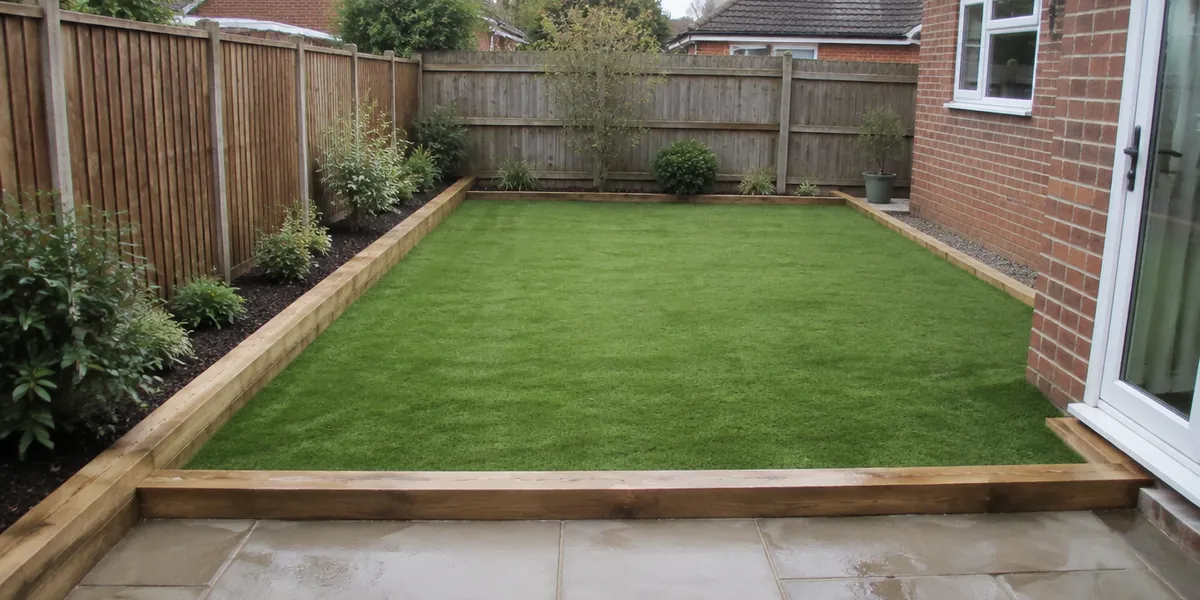
Artificial Lawn Installation
A standard artificial lawn replaces worn turf or bare ground with a synthetic surface laid on a free-draining base. It is the right choice when grass will not grow well, when you do not have time to keep a lawn, or when the garden needs to be usable all year without turning to mud.
We start by stripping the existing turf and digging out roughly 75 to 100 mm, deeper on soft clay. A geotextile weed membrane goes down on the formation, then a layer of Type 1 MOT sub-base compacted with a plate compactor in thin passes. On top of that we screed 20 to 25 mm of granite dust or sharp sand to a smooth, even finish, with a gentle fall so surface water moves away from the house.
Edging holds everything in place. We use treated timber boards, steel edging or railway sleepers, depending on the look you want and whether the lawn meets a patio or a border. The grass is then rolled out with the pile all running the same way, cut in, joined, pinned or fixed at the perimeter and brushed up.
- Pile height: shorter piles of around 25 to 30 mm look neat and recover well; longer piles look lusher but flatten more under heavy use.
- Density and yarn: a denser stitch rate and a mix of straight and curled yarns stand up better and look less plastic.
- Backing: a perforated or fully permeable backing lets rain pass straight through to the base.
Artificial Grass for Pets and Play Areas
Dogs and children are the two biggest reasons people in Stocksbridge ask us about artificial grass, and both need a slightly different build from a lawn that is mostly looked at.
For pets, drainage and odour come first. We make sure the sub-base drains freely, and on heavy ground we may add a deeper stone layer or tie the base into a soakaway or existing drainage. A fully permeable backing helps urine pass through quickly rather than sitting in the pile. For infill we either leave it out on short, dense products or use an antimicrobial or odour-control infill in place of plain kiln-dried sand. Regular rinsing with a hose and an enzyme cleaner on the favourite spot keeps smells down, and we explain that routine on handover.
For play areas, the base takes more pounding, so we compact it harder and fix the edges firmly so a sliding child does not lift a corner. Under climbing frames and swings we can lay a shock pad beneath the grass. Goalmouths and the line between the back door and the trampoline see the most wear, and we place seams away from those spots wherever the roll width allows.
One practical point: synthetic grass in full sun can get hot underfoot, especially on a south-facing garden in July. Lighter-coloured yarns, some shade from a tree or sail, and a quick spray of water before the children go out all help.
Artificial Grass Replacement and Repair
Artificial grass does not last for ever. After years of sun, wear and the odd barbecue, the pile flattens, fades or goes brittle, and seams can lift where the adhesive has failed or the base has moved. We repair what can be repaired and replace what cannot.
Common repairs include re-gluing lifted seams with fresh joining tape and adhesive, cutting out and patching a burn or a dug-up corner with an offcut matched for pile direction, refixing edges that have come away, and topping up or changing infill. Where the grass has sunk in one area, we lift it, rebuild the base beneath and relay it.
Many problems we are called to are really base problems. If the original installer laid the grass straight onto soil or a thin layer of sand, it will rut, hold water and let weeds through, and patching only buys time. In that case we recommend lifting the lot, digging out properly and starting again with a Type 1 and granite dust base.
When we lift old grass we roll it, take it away as registered waste carriers and send it for recycling where a local facility accepts it. If you would rather go back to real turf, our New Lawn Installation team can prepare the ground and lay a natural lawn instead.
Why Stocksbridge Homeowners Choose Us for Artificial Grass Installation
We are landscapers first, so we treat artificial grass as a groundworks job with a carpet on top, not the other way round. That means a proper dig-out, a compacted stone base and an edge that will not move, rather than a few bags of sand on the existing soil.
We also know real lawns. If your garden would actually suit natural turf with the right care, we will say so and point you towards our Lawn Restoration or Lawn Maintenance services instead. If it is a shaded, compacted or heavily used space where grass keeps failing, artificial grass is often the sensible answer.
- Samples brought to your garden so you can compare pile, colour and backing in real light
- Seams joined with tape and adhesive, with matching pile direction
- Waste removed by registered waste carriers
- A written quote and a written guarantee on our workmanship
How Our Artificial Grass Installation Works
- Survey: we measure the area, check levels, drainage and access, and show you grass samples.
- Quote: you receive a written quote listing dig depth, base materials, edging and product.
- Dig-out: we strip turf and soil to the agreed depth and take the spoil away.
- Base: we lay membrane, compact Type 1 in layers and screed granite dust or sharp sand to level.
- Edging: timber, steel or sleeper edging is fixed to hold the base and the grass.
- Laying: the grass is rolled out, joined, cut in, fixed and brushed, with infill if specified.
- Handover: we walk you through cleaning, brushing and pet care.
Most average back gardens in Stocksbridge are finished in two or three days. Access matters: if everything has to go through the house, we protect the floors and allow extra time for barrowing.
How Artificial Grass Installation Is Priced in Stocksbridge
Every garden is priced from a survey, because the work below the surface varies so much. The main factors are:
- The area and its shape, since awkward curves and narrow strips create more offcut waste and more seams
- How much existing turf, soil or old hard surface has to be dug out and removed
- Ground conditions, with soft clay or poor drainage needing a deeper base or a soakaway connection
- The edging chosen, from timber boards to steel or sleepers
- The grass product itself: pile height, density, yarn type and backing
- Extras such as shock pad, pet-specific infill or a second membrane
- Access, especially if materials and spoil must go through the house
We itemise each of these on the quote so you can see where a cheaper or more expensive choice makes a difference.
Artificial Grass Installation Throughout Stocksbridge
We lay artificial grass right across Stocksbridge. In Deepcar and Bolsterstone, if your back garden is compact and your only access is through the house, we plan the job around that. If you live in Midhopestones and your lawn sits in shade for half the day, artificial grass can solve a problem turf never will. We also install pet runs and play areas in Wortley and Ewden, and we travel to homes in nearby Penistone, Hoyland and Barnsley too. Call Stocksbridge Landscaping & Driveways to book a free survey.
Planning more than one job? Have a look at lawn services.
Your Questions Answered
How deep do you dig out for artificial grass?
Usually 75 to 100 mm below the finished level, and deeper on soft clay or where drainage is poor. That depth makes room for a compacted Type 1 sub-base and a 20 to 25 mm laying course of granite dust or sharp sand. Laying grass straight onto soil or a thin bed of sand is the main reason synthetic lawns rut, puddle and grow weeds.
Is artificial grass suitable for dogs?
Yes, if the base drains well and the product has a permeable backing. We lay a free-draining stone sub-base, choose a dense, hard-wearing pile and use an antimicrobial or odour-control infill or none at all. Picking up solids promptly, hosing the area regularly and using an enzyme cleaner on favourite spots keeps it fresh.
Will artificial grass get hot in summer?
It can. Synthetic yarn absorbs heat, so on a south-facing garden in direct sun the surface can become uncomfortable for bare feet and paws. Lighter yarns, shade from a tree, sail or pergola, and a quick spray of water before use all help. We will talk through the aspect of your garden at the survey.
Can you join artificial grass so the seams do not show?
We lay every roll with the pile running the same way, butt the edges closely and bond them on joining tape with outdoor adhesive. Once brushed up, a well-made seam is hard to spot from normal standing height. We also plan the layout so seams avoid the busiest routes across the garden.
What happens to old artificial grass when it is replaced?
We lift it, roll it and remove it from site as registered waste carriers along with any failed base material. Where a local facility accepts synthetic turf for recycling, that is where it goes. We then rebuild the base properly before laying the new grass, so the replacement does not repeat the problems of the old one.